Tilapia Feed Management plays a vital role in the success of every tilapia farming operation. Whether you’re a new breeder just starting out or an experienced aquaculture professional, understanding how to manage feed efficiently can directly impact the health of your fish, reduce costs, and boost your profits. This comprehensive guide is designed to give you actionable, science-backed insights into feeding your tilapia the right way. Let’s dive in.
Why Tilapia Feed Management Matters More Than You Think
Feed is not just food—it’s the foundation of your farm’s productivity. Poor feed practices can lead to stunted growth, increased mortality, and polluted water. On the other hand, well-managed feeding leads to healthier fish, better growth rates, and ultimately, more profitable harvests.
Learn more about: Probiotic Supplement for Aquatic Animal
For many farmers, feed makes up more than 50% of production costs. That’s why getting it right is not optional—it’s essential.
Understanding Tilapia’s Nutritional Needs at Every Growth Stage
Tilapia require different nutrients depending on their stage of life. Fry (young fish) need protein-rich diets for rapid growth, while adult fish can thrive on feeds with lower protein content but balanced energy levels. A typical feeding schedule might include:
- Starter feed (0-4 weeks): 38-45% protein
- Grower feed (1-3 months): 30-36% protein
- Finisher feed (3 months onward): 28-32% protein
Learn more about: Best Feed Strategies for Fast-Growing Tilapia
Ensuring that feed contains essential amino acids, vitamins, and minerals helps avoid deficiencies that can slow down growth or cause deformities.
Choosing the Right Feed for Tilapia: Quality vs. Cost
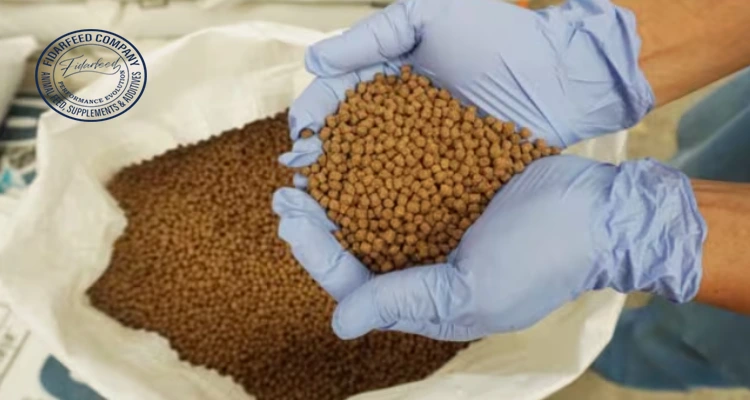
Many farmers struggle with the balance between feed quality and affordability. While cheaper feed might seem like a good deal, it often leads to higher feed conversion ratios (FCR) and more waste. High-quality pellets with proper nutrient balance, good water stability, and digestibility lead to better results. Always check feed labels for crude protein, fat content, fiber, and moisture levels.
Learn more about: How to Reduce Feed Conversion Ratio (FCR) in Commercial Tilapia Production
Real-world tip: If your fish are eating but not growing, poor feed quality might be the culprit.
Feeding Strategies That Improve Efficiency and Minimize Waste
How you feed your tilapia matters just as much as what you feed them. Some tips include:
- Feed multiple times a day in small portions rather than one large feeding.
- Observe fish behavior during feeding to ensure they’re consuming all the feed.
- Avoid overfeeding, which increases waste and pollutes the water.
Manual feeding may work for small operations, but automatic feeders provide consistency and reduce labor on larger farms.
How Water Quality Impacts Tilapia Feed Management
Water quality and feed efficiency go hand in hand. Poor water conditions lead to stress, which reduces appetite and slows digestion. Key parameters to monitor include:
- Temperature: Optimal range is 26-30°C
- Dissolved Oxygen: Above 5 mg/L is ideal
- pH: Should be between 6.5 and 8.5
Regular monitoring and proper aeration ensure that your fish can make the most of the feed they consume.
Monitoring Feed Conversion Ratio (FCR) for Maximum Profit
FCR is the amount of feed required to produce one kilogram of fish. A lower FCR means more efficient feed use. For tilapia, a good FCR is between 1.5 and 1.8.
To calculate FCR: FCR = Total Feed Given (kg) / Total Fish Weight Gain (kg)
Learn more about: Fermented Protein: The Sustainable Future of Aquaculture Feed
Tracking FCR regularly helps you spot issues early and adjust your feeding or farm conditions accordingly.
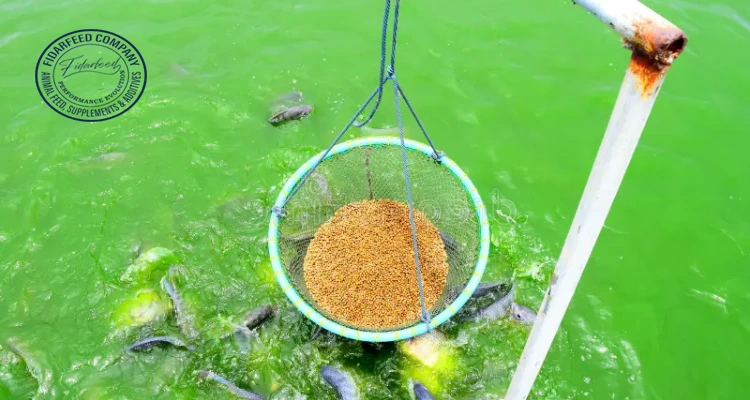
Common Tilapia Feed Management Mistakes (And How to Avoid Them)
Mistakes are part of farming, but some are easily avoidable:
- Feeding at the wrong time of day (e.g., during extreme heat)
- Using one feed type for all stages of growth
- Neglecting feed storage, leading to spoilage or contamination
Learning from these pitfalls can save you time, money, and frustration.
Sustainable Tilapia Feed Practices for Long-Term Success
Sustainability isn’t just a trend—it’s a necessity. Farmers are turning to alternative protein sources like insect meal or plant-based formulations to reduce reliance on fishmeal. Other practices include:
- Recycling pond sludge as organic fertilizer
- Integrating feed strategies with water-saving techniques
- Using locally sourced ingredients to lower costs
Learn more about: The Application of Bentonite in Fish and Shrimp Feed
These eco-friendly strategies not only support the environment but can also improve farm profitability over time.
Final Tips for Better Tilapia Feed Management on Your Farm
Successful tilapia feed management comes down to balance: between quality and cost, feeding and monitoring, short-term gains and long-term sustainability. Understand your fish, know your numbers, and keep learning from each cycle.
If you found this guide helpful, feel free to leave a comment, share your experience, or ask questions. We’re here to help you build a more productive and sustainable farm.